Our world is blazing as a consequence of the climate crisis . . . but what if the climate crisis is only one factor now being used to cover over other equally troubling causes?

All natural disasters, whether wildfire, hurricane, tornado, or flood, have an other-worldly feel to them. They are an instant reminder that we are always at the mercy of a force much bigger and more powerful than we are. I lived through Hurricane Hugo in a city — Charlotte, North Carolina — 200 miles from the coast. One of Charlotte’s most compelling features is its trees and in the old, inner-city neighborhood in which I lived, the canopy cover was almost total thanks to the 100-foot White Oaks lining the streets and shading the homes. You don’t see those particular oaks on the coast because they aren’t so likely to withstand a hurricane. But neither were the forests of tall thin pines that were flattened en masse on the 200-mile route up I-26 and I-77 that Hugo took from Charleston to Charlotte.
Initially a category 5 hurricane with 160 miles per hour winds and then a category 4 with winds of 140 mph when Hugo made landfall at South Carolina, the damage in the Caribbean and to Charleston were the worst. But as we’ve now seen so many times, hurricanes in dense urban areas are calamitous. Charlotte was no exception. Winds were clocked at 100 miles per hour (much less than the storm’s previous 140 mph but still too much for the inland trees). Windows in downtown skyscrapers were blown out, TV station antennas collapsed, thousands of boats in the nearby lake were damaged or destroyed, and downed trees and power lines meant 85% of the city’s homes and businesses were without power. At my home, we were without power for 15 days.
That was 34 years ago, and at the time I was too busy trying to live without power, clean up debris, and somehow dismantle and remove the five 100-foot oaks that came down around my house. I didn’t have the time or mental space to consider what the deeper issues might be regarding the storm’s impact. There were certainly many losses and many after-effects. With city-wide outages (including at grocery stores), the National Guard patrolled the streets for weeks. Months later, many roads still had tree limbs and other debris hauled out and blocking one of their two lanes. As a runner, these streets were far from safe and four people training for the upcoming marathon were hit and seriously injured. Three of them died. I was the one that didn’t.
Unlike the people of Lahaina, in the aftermath of this disaster, I had a fully intact home. So did everyone else I knew. And despite the 85% power outage from so many downed lines and blown up transformers, there were no fires, no doubt because there was torrential rain. And while we were well on our way to a changing climate in 1989, this was not the story surrounding the inland-driven Hurricane Hugo. It never came up at all. Now it’s the first, and sometimes only, reason given. That may be the case, but it may also be very different from the full story.

on Unsplash
Climate Change and the Recent Fires on Maui
In the aftermath of the mostly deadly and devastating fire in the US in over a century, the hospitals are currently filled with burn victims and the numbers of missing loved ones are still larger than the number of bodies thus far recovered. The toxic air around Lahaina is unsafe to breathe and survivors face the daily struggle of rebuilding their lives while grief-stricken and in shock from the degree of trauma they’ve faced and continue to face. As more and more of the facts come out about the cataclysm on Maui, we know that the water ran dry in Lahaina as fire fighters and residents fought desperately to put out the heavily fueled flames. There is a long and tragically unjust history to that lack of water that has nothing to do with climate change.
While the golf courses and pools of the many resorts and luxury estates have remained richly verdant thanks to water rights appropriated from the Native Hawaiians (Kanaka Maoli), western Maui has become a more water-scarce land compared to two hundred years ago. Today Native Hawaiian communities are often lacking sufficient drinking and household water, as well as water for crop irrigation. While always a land of micro-climates, two centuries ago there were natural pockets of the lush, tropical paradise we imagine when we conjure up the iconic image of any Pacific island. A land of wetlands, natural springs and waterfalls, as well as drier areas where bananas and breadfruit were plentiful within food tree forests, western Maui was a fitting seat for the Hawaiian Kingdom. But since then, the sugar cane and pineapple plantations that came with colonization of the island usurped land and diverted water. The theft was enormous: to produce just one pound of sugar requires two thousand pounds of fresh water. During plantation times, the island was producing a million tons of sugar annually. In addition to the water diversion and well pollution from pesticides, forests were felled to clear land and non-native grasses were planted for livestock to feed upon.
By the late twentieth century, the plantation owners were done with the island as they found cheaper conditions to exploit elsewhere. Still, some of the plantation owners maintained an economic interest in the island and used these appropriated natural resources to build and maintain luxury estates and tourist resorts. Continuing what was begun with the plantations, they dramatically upended western Maui’s ecosystems as they dried up its natural watersheds.
Since the fires, we’ve also learned that the grasses surrounding the area that was ablaze were bone dry. But the drought at this time of year has long been a seasonal effect on the island and it too has roots in the story of the plantations. Because of the detrimental extractive water policies and practices first by plantation owners and then by developers, the invasive non-native grasses brought for plantation livestock took over the land that was left with no water. These are the grasses that were the early fuel for the fire.
Beyond the contribution from the climate crisis of combined high pressure and high winds, the conjoined powers of colonialism and capitalism are at the root of this disaster. The tremendous emphasis on tourism and the associated overdevelopment, as well as the mono-cropping that preceded them on the plantations, ruthlessly depleted the land, the soil, and the water. When the winds came, the flammable conditions were already well-established. The high winds can certainly be associated with climate change but the power lines and transformers they brought down were also an effect of the well-known aging and maintenance problems associated with the island’s electric power infrastructure.
As line after line came down and sparked one flame after another, firefighters and residents desperately fought to keep up. But the power was never cut to these lines and each line went down hot. There were no sirens for warning the people of the burgeoning conflagration, and now the hydrants ran dry and there was no water to fight with. An entire antiquated and under-serviced system failed the people and their historic cultural center Lahaina.
To add insult to such extreme injury, when everything had burned and there was only smoldering rubble, completely against national guidelines for utility companies handling of evidence following a wildfire, the power company — Hawaiian Electric — removed the damaged poles and their lines, the damaged transformers and any other equipment from inception points for the Lahaina fire. Essential evidence for forensics was no longer undisturbed in situ when the federal Bureau of Alcohol, Tobacco, Firearms and Explosives (ATF) arrived at the site. Hawaiian Electric has since retained the law firm that represented Pacific Gas & Electric (PG&E), the California utility company found responsible for igniting the devastating 2018 Camp Fire as well as other deadly wildfires. There is a disturbing, documented trend of utility companies removing evidence as wildfires become more of an issue and as power lines are more often found to be an igniting cause. Four hundred of the 750 poles traversing West Maui were damaged in the wind and fire on August 8. Three hundred of the 575 transformers were also damaged. The substation next to the presumed inception point was destroyed.
The deeper we look, the more complex a picture becomes. Rarely is there a single cause to the devastation following any disaster. And in a world populated by humans, there surely will be humans involved in that deeper, more complex picture.
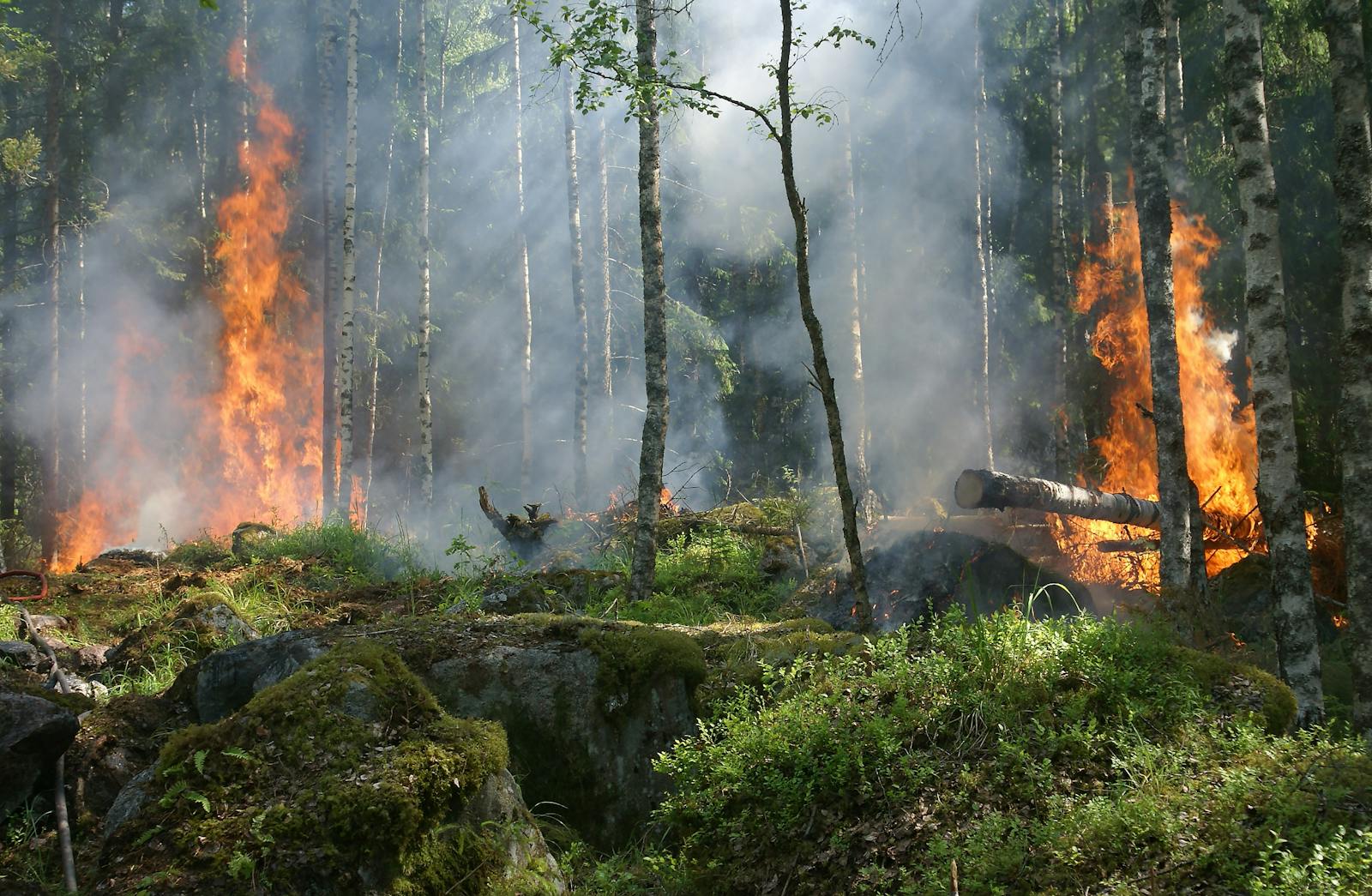
Climate Change and the Wild Fires in New Mexico
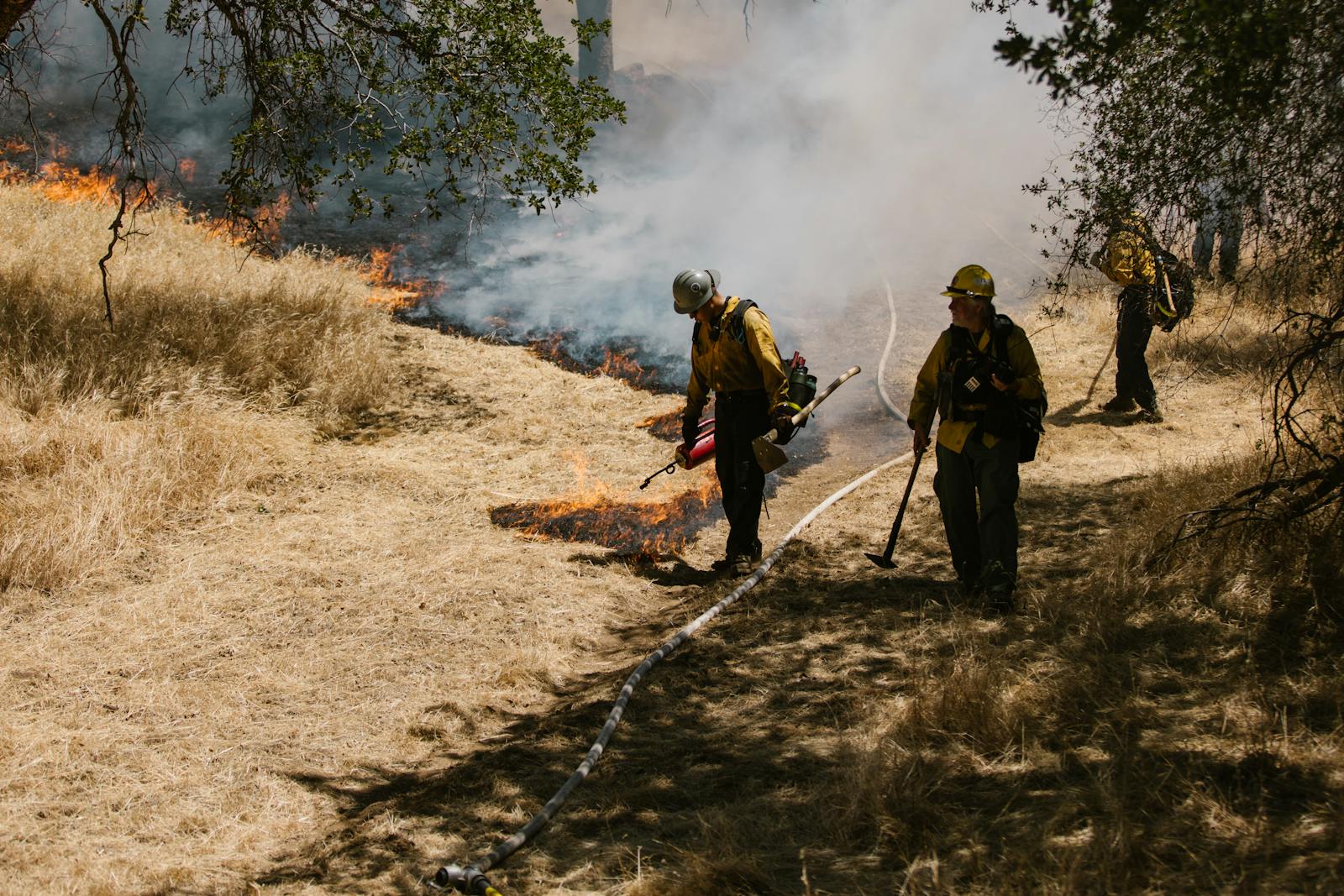
The US Forest Service has as one of its primary missions the job of containing wildfires. Increasingly, they attempt to serve this mission with “prescribed burns” in combination with emergency fire suppression.
The problem is that in the absence of a national wildfire policy, there are no constraints on these intentional burns. Further, they are being done with funding very specifically allocated for emergency fire suppression. The Forest Service is carrying out its self-determined strategies without proper analysis from an outside entity and without any involvement in the planning stages of the citizens most affected by these burns.
A proper planning process would go much further toward assurance of better management of these prescribed burns. Within such a planning process, old growth trees, wildlife, wildlife habitats, water, soil, and public health would have been fully considered in terms of protection. The National Environmental Policy Act (NEPA) is designed to ensure proper planning in order to significantly decrease the likelihood of environmental disasters. But there is no accountability for using the NEPA process though it is currently our primary tool for protecting our forests and ourselves.
In New Mexico last year, prescribed burns set by the Forest Service were responsible for the largest and most destructive wildfire in the state’s history — the Hermit’s Peak/Calf Canyon Fire. The fire burned 341,471 acres (138,188 hectares), destroying 62 million trees in the Santa Fe National Forest and on private lands. More than 400 homes were burned along with a tradition-rich way of life that the local residents’ families had lived and treasured for two to three centuries. In a bitter irony, the US Forest Service set the controlled burn to get rid of the dry undergrowth piling up on the forest floor so that it would be less likely to fuel an actual wildfire.
According to an 85-page review released by the US Forest Service, the burn had been planned but it was planned years earlier. In the interim, severe drought, warmer temperatures, and a lighter snowpack created conditions much drier than would have been acceptable for the intentional burn. Further, accurate weather information for the day was unavailable and thus the high winds were unexpected. Finally, the fuel load in the forest was higher than planned for. This ultimately led to a more extreme fire than years-old planning could have anticipated.
Since the Hermit’s Peak/Calf Canyon Fire was ignited, for at least three additional New Mexico wildfires the US Forest Service employed both aerial and ground fire ignition operations to expand the wildfires. Intentional burns were thus used in areas that would not have burned due to the initial wildfire. One of these — the 325,000 acre Black Fire — was in the Aldo Leopold Wilderness. During the fire, an aerial fire hot spot map seems to indicate that a fire was intentionally ignited by the US Forest Service approximately 10 miles to the south of the main fire through the dropping of incendiary devices from the air. Such a distance and the noted wind direction preclude the idea of a back burn for containment of the main fire. Sarah Hyden, co-founder of The Forest Advocate, explains:
“This intentionally-ignited fire was herded to the north over several days until it joined the main fire. Then, on the Forest Service’s official fire perimeter map, both fires were suddenly joined together as one fire. There was no distinction made between the original fire which was not caused by USFS actions, and the sections of the fire to the south, amounting to a separate fire, that were directly ignited by the Forest Service. The agency had also expanded the main fire in other directions.
The intentional fire was only stopped by monsoon rains and by the intervention of a Sierra County Commissioner. Shouldn’t there have been a public analysis process before burning most of the Aldo Leopold Wilderness?”
Sarah Hyden, Co-Founder of The Forest Advocate
Hyden further explains that the burns started by the Forest Service in conjunction with the main fire created a “boxing-in” formation. In this kind of formation, the fire is burning in almost all directions simultaneously, thereby surrounded anything within that formation. In this case, wildlife has no means of escaping as they would in a typical wildfire or regular prescribed burn situation. In boxed-in formations, the wildlife is often trapped and can become injured or incinerated.
It’s also important to note that conservation scientists are generally strongly supportive of “managed wildfire for resource benefit,” i.e., letting wildfires naturally ignited go ahead and burn when it is safe to let them do so. Such an approach places fire back in its natural role relative to forest ecology. This supports biodiversity in the forest . . . up to a point. There must be a balance as there is a natural limit to how much fire is constructive for any forest. Intentional ignition can easily go beyond this limit.
Throughout the western United States, more and more often firefighters are being assigned as intentional burn crews working under emergency fire suppression funding. There’s essentially no NEPA analysis before they’re called in. With a belief that the calls of conservationists for greater NEPA analysis on prescribed burn operations are slowing down what the Forest Service believes needs to be done, agency strategies are being employed as work-arounds. That is, wildfires are intentionally expanded — sometimes through the ignition of new ones in the same general vicinity of, though not proximal to, existing wildfires — so the Forest Service can greatly enlarge implementation of their desired burns. Agency quotas factor into the strategy.
Climate change and associated increases in wildfire activity have been used here too as a cover narrative. Data regarding the extent of wildfire in the past several years is more likely to claim a substantial increase in total reported acreage consumed when in fact some of that acreage was ignited by the Forest Service. This ignition even may have been done while in full emergency fire suppression and in operations of confining and containment.
Climate Change and The Imperative for Truth and Adaptation
The climate crisis is no longer a topic for discussion. It’s a daily reality. In a recent New York Times opinion piece, Serge Schmemann wrote of his family’s experience this year as they retreated to their usual haven.
“On Lac Labelle, we were never in direct danger, but the acrid smoke and the unfamiliar drumbeat of crisis from the vast Canadian wilderness hit home. After decades of being told that we humans were knowingly, fundamentally and radically altering the climate of our planet, the eerie orange haze had invaded the zone in which my family had always thought we could take refuge.
This was not another report of melting icecaps, rising oceans, blistering heat or unusual tornadoes somewhere far away; this was a horizon-to-horizon pall over us, rising from infernos across the great Canadian north that had been ignited by record temperatures, record drought and ceaseless lightning storms. Nothing like it had ever happened before — these wildfires began far earlier and spread far faster than usual, and they have burned far more boreal forest than any fire in Canada’s modern history.”
Serge Schmemann, “It Is No Longer Possible to Escape What We Have Done to Ourselves”
Of course Schmemann knows this isn’t just happening in Canada as the weather this summer has been a pretty widely-spread global disaster. He quotes Michael Flannigan, professor at Thompson Rivers University in British Columbia and 35-year expert on the interaction of fire and climate: “Even I am surprised by this year. Temperatures are rising at the rate we thought they would, but the effects are more severe, more frequent, more critical. It’s crazy and getting crazier.”
As a 1.5 degree Celsius increase no longer appears achievable, the question for each of us, as well as for all of us collectively, becomes one of how to adapt — not in the future but today. And in order to know how to adapt, we need to know who we can trust. We need to know who we can count on as we wrestle with surviving the heat, the drought, the wildfires, the deluges, and the floods. We need to know the truth about the past, about the current conditions, and about realistic projections for the future. We need historical and evidence-based analysis when things go wrong and also for planning to get things as right as possible. And we need accountability from those we entrust with the organizations that support us and our ecosystems.
My intention in this essay is not to vilify the well-meaning employees of power companies who serve us all with a necessary utility or the intrepid forest service employees who work so diligently to serve our wild lands, often risking their lives to do so. Rather, like many others, I have questions about the decisions being made by those in charge of these organizations. Who do we turn to when the power companies and the forest service actually bear responsibility for the blazes? And what underlies the narrative of climate change as it begins to look as if it is to blame for everything happening today? What is climate change being used to cover over, even when it too has a role to play in yet another of our many “natural” disasters?
Thank you for reading Principles of Being.
Please feel free to share this post
if you found it interesting.

 Subscribe below to automatically
receive notifications of future posts.
 The Principles of Being
Thanks for writing about this terrifying subject. As I recently drove through Oregon, I saw and suffered through farmers burning their dry fields all over the state, sending huge plumes of smoke into the ozone, making it hard to breathe all around the state, which was already suffering from large natural fires. I researched this practice and found that it is old-fashioned, ill-advised, and depletes the soil of all its nutrients! The farmers would be much wiser to let the ground go fallow over winter, and then they wouldn’t have to add back nutrients every year with all kinds of fertilizers. There needs to be a massive education program on this.
Thank you for this thought-provoking article. Sadly, even when we avoid pointing fingers and simply want to move forward from this point, people and companies become defensive and short-sighted. I appreciate your insightful blog!