Coming to terms with my own pretending about the predicament we’re in, side-stepping the hope versus fatalistic acceptance trap, and opting instead for letting go while staying present, all lead to the peace and authenticity that can come from being [at least somewhat] prepared and fully present for a future that remains unknown to us.
To read online, please go to: https://theprinciplesofbeing.com/2023/11/30/now-what-getting-on-with-it/
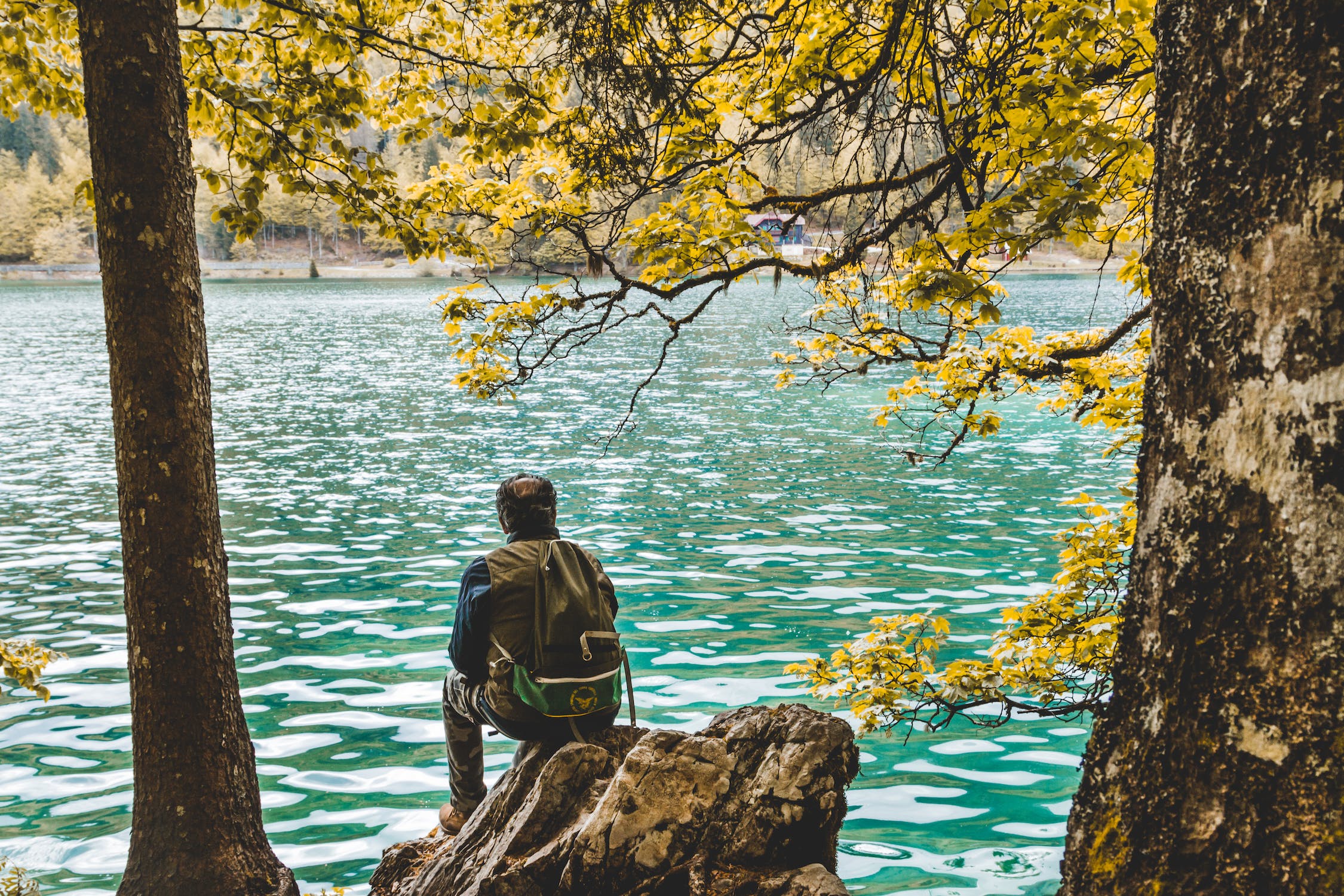
I ended my last post, The World As We Know It, with the injunction “Let’s get on with it.” After writing that post on our game of pretending about the predicament the world is in, I spent time thinking more deeply about the ways I’m still pretending. As one way out of continuing to do so, I wrote down a list of things I’ve been working on to respond and adapt to our predicament. It’s not meant to be a prescriptive list, just some things I’m putting in place for “getting on with it,” for facing the predicament as is and learning to live as well as I can within it. I share the list below in case it can serve as any kind of starter set for you to devise your own guidance for yourself. We can’t know what lies ahead for us. The best we can do is prepare ourselves for the possibilities (or probabilities in some cases). Maybe you’ve done this too. If so, please add in the comments section any additional suggestions for what I’ve started below.
But Will Personal Change Make Any Difference At All?
In his 2009 essay “Forget Shorter Showers: Why Personal Change Does Not Equal Political Change,” author, philosopher, and ecological activist Derrick Jensen (co-author of Bright Green Lies) cautioned that we must not pretend that our individual actions will get us out of the collective predicament we’re in. While still stressing that these personal changes are important, Jensen quantifies the modest impact of these actions and then advocates passionately for more radical activism as a crucial corollary.
“The good news is that there are other options. We can follow the examples of brave activists who lived through the difficult times I mentioned – Nazi Germany, Tsarist Russia, antebellum United States – who did far more than manifest a form of moral purity; they actively opposed the injustices that surrounded them. We can follow the example of those who remembered that the role of an activist is not to navigate systems of oppressive power with as much integrity as possible, but rather to confront and take down those systems.
“I want to be clear. I’m not saying we shouldn’t live simply. I live reasonably simply myself, but I don’t pretend that not buying much (or not driving much, or not having kids) is a powerful political act, or that it’s deeply revolutionary. It’s not. Personal change doesn’t equal social change.”
Derrick Jensen in “Forget Shorter Showers”
In the nearly fifteen years since Jensen’s essay was written, global corporate and governmental leaders as well as the vast majority of consumers in the wealthier countries perpetuating our predicament have consistently demonstrated an unwillingness to make the level of changes needed to redirect the grievous conditions in which we and our fellow species find ourselves on the planet today. Not only have the long list of critical indicators not tracked downward, they continue to escalate.
As we find it more and more impossible to imagine a radical redirection from the people in financial and policy-making power, the options remaining mostly appear to be ones of personal action and the collective building of communities that model the intentional shift away from an industrial economy while repairing and restoring our worlds where we’re able to do so. It’s more often from outside of the industrialized systems that we’re better able to confront or work toward changing those systems. In fact, it’s hard to imagine working to change the industrialized systems without working on changing one’s own life, and vice versa. But also, living in this way provides one with a solid ground from which to positively advocate to and influence others.
Jensen made a point in his essay that still resonates strongly today when he differentiates the characterization of us — the collective of average persons — as consumers versus citizens.
“[The problem with perceiving simple living as a political act (as opposed to living simply because that’s what you want to do)] is that it accepts capitalism’s redefinition of us from citizens to consumers. By accepting this redefinition, we reduce our potential forms of resistance to consuming and not consuming. Citizens have a much wider range of available resistance tactics, including voting, not voting, running for office, pamphleting, boycotting, organizing, lobbying, protesting, and, when a government becomes destructive of life, liberty, and the pursuit of happiness, we have the right to alter or abolish it.”
Derrick Jensen in “Forget Shorter Showers”
Resistance remains a crucial role once we’ve stopped pretending and are facing the reality of our predicament. What that looks like for each individual will vary widely but there are many ways in which the act of foregoing the new green economy and the ecomodernist techno-fixes prescribed for our future is clearly on the path of citizen resistance and goes well-beyond the act of cutting consumption.
Jensen’s co-author for Bright Green Lies, Max Wilbert, proposes that “most people also do not understand how to turn awareness of these problems into concrete action to create a better world. We have no sense of our collective power and almost no organization in our communities.” While caveating it that we must not underestimate the extremity of the state of our world today, Wilbert quotes Langdon Winner on how we can proceed as citizens.
“[T]he path to a lively citizenship, begins with the simple choice to ‘show up!’—to attend public meetings, to join public groups, to march in demonstrations, to speak up in civic gatherings, and to become active in groups that seek to address and improve the institutions and practices of community life.”
Langdon Winner in The Whale and the Reactor
Making the simple choice to “show up!” as “lively citizens” requires, by definition, having sought out and forsaken all remnants of our personal pretending about the reality of our predicament.
The First Realization That I Was Pretending
My earliest confrontation with my own game of pretending about what’s happening with the world as we know it occurred many years after I’d already been deeply concerned about the changing climate and what was happening to the environment. I’ve been reminded recently that even in the 1990s, I was adamant that human civilization would not exist by the end of the 21st century. But what did I mean by that? A number of years ago, I came face-to-face with that question myself when I took a visiting friend to see an exhibition at a local museum.
Knowing little about the artist or what to expect regarding her work, walking into the exhibit was like entering a foreign land. My friend and I instinctively distanced ourselves from each other and, thankfully, there was no one else in the exhibit space at the time. With many temporary walls positioned to divide the larger space into more intimate alcoves, each little “room” was inhabited by several life-size clay figures. Many were full-figure sculptures, some were life-size busts, and several were life-size masks. They all truly did seem to be “inhabiting” the space as they exuded an intensity, a focused determination, that it took me a while in their presence to understand. Moving slowly from space to space and back around a number of times, each encounter began to reveal these figures to me as post-apocalyptic warriors, by which I mean stalwarts, the self-possessed, valiant, steadfast keepers of what had once been our shared flame, the living light we carried along with the rest of nature. The figures conveyed a strong sense of being indigenous in a way that represented the past, the present, and the future.
As I processed the experience throughout that day and the next, I began to understand that for years my own unreflected-upon expectation had been that “fixing” the climate change “problem” was the job of people much more powerful and highly-positioned than I was. I also never imagined they could or would “fix” it. Somehow I just continued pretending that it was their job to do it even though I knew they wouldn’t. And my shock at the idea of anything post-apocalyptic was grounded in my unprocessed belief that there would be no post- anything. The coming disaster(s) ultimately would be apocalyptic and there would be no member of our species left on Earth. We would have met our end just as so many other Homo species had done.
After even more processing, I came to see that the artist’s warriors were moving across the landscape explicitly away from the modern technology that had been instrumental in putting them in their post-apocalyptic position. They were stripped down to a few pieces of leather and some body paint, but several also wore discarded pieces of machinery as adornment. Most notably, several of the female figures held an infant, and in one or two alcoves an infant was lying alone, maybe just born. I began to understand. A video at the end of the exhibition space confirmed that the artist had a young child. Of course she had to imagine there was a post-apocalyptic world. There had to be a viable life ahead for her child and she had to do, now and later, whatever was necessary to make sure that happened.
Without realizing it, I had somehow been pretending that when the catcalysm came, I’d be done, it would be done. The world populated and controlled by our species would be over. All I could hope was that it would be quick for all of us. I’ve never seen it that way for a minute again since my encounter with those fiercely-dedicated warriors who carried our species forward but once again as part of nature rather than as part of a world that imagined itself as otherwise. Since then I’ve tried to imagine what a world I have no way of knowing for sure about would require and how I could prepare for it. In one sense, I’m no closer to answers now than when I first started trying to imagine it, but in another sense, I’ve arrived at some basic premises, thanks in part to the wisdom of others who have spent a great deal of time thinking and writing about alternatives to the ecomodernist technological future they too find unfeasible.
Same As It Ever Was
It’s so easy to slip into pretending again. I’m coming to understand that doing otherwise is a life’s work. After all, we’ve had a lifetime of taking for granted that the world as we’ve always known it was a constant, the way it would always be, certainly at least in our lifetime. Months of drought and handwringing can be followed by a week-long spate of rain and we feel certainty in our bones that it’s all okay again, things really will go on as they always have, the same as it ever was.
Autumn is spectacular in northern New Mexico and right now I feel I can find ways to get through whatever lies ahead without ever having to leave here. And then I remember that just last year and less than 40 miles from me as the crow flies, people lost their homes and family members as well as their livelihoods in the largest and most destructive wildfire in the state’s history. I can only imagine that before it happened, they too got through their days seeing their world the same as it ever was. I also imagine that the people of Acapulco, completely blindsided on October 25th by a Category 5 hurricane that only hours earlier looked like a standard-issue tropical storm, went about their days the week before under the guiding assumption that the next week would be much the same as the one prior. Or that the people of Vermont were pretending the same — that our global predicament is not so much about where we live as it is about other places and other inhabitants. Then the rain started on July 9th and dropped as much as 9 inches of precipitation by the next day, leaving the whole center of the state inundated with floodwaters. Not quite a year earlier, on August 29th, 2022 in Pakistan’s Balochistan province, immense monsoon rains flooded residential areas, leaving thousands without homes and lives as they knew them. Like the people hit by last year’s raging wildfire at Hermit’s Peak/Calf Canyon area in New Mexico, or the cataclysmic inferno this year in Lahaina on the island of Maui, or the 165-mile per hour winds of Hurricane Otis in Acapulco Mexico, and the people inundated in Vermont as well as those in Pakistan, most are still struggling to recapture some kind of life.
We may subconsciously feel there’s a dichotomized setup of hope versus fatalistic acceptance. In that case, we may also subconsciously default to hope as that generally has been the culturally preferred path. But this is a false dichotomy with neither as a good alternative. Hope is pernicious in that it glorifies an embrace of, a preference for, something other than what is. It’s a desperate clinging to something we don’t have, probably can’t have. How then can we ever be satisfied with what is? On the other hand, a fatalistic acceptance is a kind of giving up rather than a giving in. When we give up, ostensibly we’ve “lost hope.” But hope wasn’t what ever could have served us as we clung to it in the first place. Alternatively, when we give in, when we surrender, we’re letting go of certainty, moving into and even embracing not knowing.
There’s the opportunity for a great humility to enter in here after so much ego-involvement with knowing and the status that comes with such purported certainty. It’s true that someone might also say something similar about hope — that it’s a letting go of knowing, an embrace of faith in something bigger than what one is able to bring about by oneself. But there’s still attachment to a desired outcome here. It’s hope as a prayer, and as such it’s still not a letting go. We’ve let go of knowing “how” we’ll get there but are still attached to the “what” that we’re hoping for, whereas surrender — at least in this case — is a true non-attachment to outcome and instead an engagement in and with what is. We can’t know about the “what” of the future, but we’re committed to staying present with the present, and from there we can learn the “how” of preparedness for an unknown future.
There’s a richness in staying present with the present that isn’t possible moment-to-moment when we’re pretending or hoping about the future. In this moment, this autumn day on which I’m writing this essay is glorious in and of itself, and truthfully all the more so because I’m not taking a minute of it for granted. It’s at the forefront of my mind that there are still wonderful days and this is one of them. There’s no preoccupation with what the future may hold when I’m wholly present in this moment. I don’t have to spend energy keeping my guard up against being let down by my defense mechanisms of hope or pretending.
Lest this sound pollyanna-ish, let me be clear: It’s only through fully integrating into our embodied consciousness the reality that our predicament has already brought about tremendous suffering for many, and could do so for each of us at any time, that we’re able to set aside the barely pushed-down fear and overwhelm that haunts us daily as we take in what’s truly happening globally as a result of extreme changes to the weather but also to the environment, to biodiversity, and to people who have contributed little to the excess at the root of much of our shared predicament. It goes much deeper than a simple acknowledgement of what is now widely considered fact. We have to be able to both hold and process all of this until we’ve arrived at that integration that represents deep reflection and internalization. Staying grounded in this realized truth is challenging, but in fully accepting the reality of it, and also in letting go of any certainty about what lies ahead, we become capable of being right here right now in such a way that we really can revel in the splendor of all of that of which we’re still a part.
This is the reason to keep our head out of the sand, to keep ourselves from looking away, to stop pretending it isn’t happening. Having fully accepted the reality of our predicament and integrating it into our embodied consciousness doesn’t absolve us of our responsibility to stop contributing to the brutal consequences and to be mitigating harm wherever we can. But when we’ve done whatever preparation we can and are actually living our lives in a way that reflects that full acceptance and integration, then we’re able to be truly present for what is still here.
There are siren songs calling us away from our grounding in the reality of our predicament. Perhaps the one most difficult to resist is the one with information about the future. Any clarity at all in this regard is an illusion as no one can know what lies ahead. Modern civilization has never been here before. That clear picture of the future is precisely the siren song of the ecomodernists and their high-tech renewable energy plans and new green economy certain to safeguard our future. It’s most enchanting quality is the fact that the life it describes for us looks very much like today, only better, brighter, and less worrisome. We don’t have to give up anything. (Except that many others have had to and continue to have to do so.) And we don’t have to change. (But the fact that we don’t change continues to do untold harm to other humans, other species, and the Earth itself. Sooner or later we too will feel the harmful effects of our unwillingness to give things up and to change.)
Without the realistic possibility of specificity, it’s still probably safe to say that there will be endings that are welcome ones, endings we can actually celebrate. And there will also be endings we deeply grieve. The same is true of new beginnings — some will be welcome and some we’ll have to work to accept. The thing about endings and beginnings is that they aren’t discrete. They overlap, sometimes for long periods of time. We’re already in this place today on a number of fronts.
In “The Answer,” anti-modern Modernist poet Robinson Jeffers offered advice on how we might maintain integrity and live an authentic life in the face of so much duress. In essence, the “answer” is to open our hearts and minds to the natural world of which we’re but a part, placing ourselves in geological and astronomical time rather than just staying with the scale of our day-to-day life so that we may see “the enormous invulnerable beauty” of the vast universe and its multiplicity of parts, including the array of those before us here on Earth. In this way, we take ourselves out of our cramped little human enterprise and experience what Jeffers saw as the content of enlightenment.
Then what is the answer? -- Not to be deluded by dreams.
To know that great civilizations have broken down into violence, and their tyrants come, many times before.
When open violence appears, to avoid it with honor or choose the least ugly faction; these evils are essential.
To keep one's own integrity, be merciful and uncorrupted and not wish for evil; and not be duped
By dreams of universal justice or happiness. These dreams will not be fulfilled.
To know this, and know that however ugly the parts appear the whole remains beautiful. A severed hand
Is an ugly thing, and man dissevered from the earth and stars and his history . . . for contemplation or in fact . . .
Often appears atrociously ugly. Integrity is wholeness, the greatest beauty is
Organic wholeness, the wholeness of life and things, the divine beauty of the universe. Love that, not man
Apart from that, or else you will share man's pitiful confusions, or drown in despair when his days darken.
Endings and Beginnings
As we move beyond pretending into a more embodied consciousness of the reality of our predicament, there are a number of almost predictable reactions. A common experience for many is a deep sense of disillusionment with all the things coming at us, so many empty words and promises, but also so much needless “stuff” for purchase, all looking like just so much more crap to fill up homes, landfills, habitats, every corner of the Earth. How did we ever think this was going to be okay? Why did we ever want or buy all this stuff? Another is a sense of urgency to effect change. Is there a local chapter of Extinction Rebellion? Who’s doing something that’s making an impact and how can we join them? Is there a pipeline to chain ourselves to within driving distance? And of course there’s the reaction of deep despair. We’re all fucked; there’s no chance we’re getting out of this. How could we have been so stupid? And why did we have to take so many other living things out with us, not to mention all the humans who didn’t even contribute to our wanton consumption, waste, and destruction?
Perhaps the most all-consuming reaction when one moves beyond pretending is that of ecological grief, or what the late Stephen Harrod Buhner referred to as “Earth Grief”.
“There comes a time, for all of us, when we finally, experientially, in our feelings and our intellect, grasp the size and pervasiveness of the wound’s that surround us, when we finally grasp the immensity of the work that lies before the human species. That realization is very hard to bear. . . .
“And the complex emotional state that I call Earth Grief — and that others call climate grief/ecological grief/solastalgia — is our feeling response to a communication from the heart of Earth, urging us to take a path, and engage in a work, that is quite different than the one our species has taken/engaged in the past two thousand years. We are being called, individually and collectively, to reinhabit our interbeing with the world.”
Stephen Harrod Buhner in Earth Grief: The Journey Into and Through Ecological Loss
Buhner explains that the power of Earth grief moves us to stop pretending, to stop looking away and actually face what is happening in the world as we’ve known it. He maintains that the only way to move beyond the ending of the old ways and toward the new ways that may be brought into being is to allow ourselves to deeply experience this grief. In doing so, we’ll find our own way forward and we’ll become aware of the work that is uniquely ours to do as we engage in the reality of ecosystems in ruins and a planet spiraling out of balance while our human actions continue to thwart a new equilibrium.
When he quotes the late James Hillman, who wrote, “We have lost the response of the heart to what is presented to the senses,” Buhner is cautioning about the costs if we choose not to truly feel the impact of the damaged landscapes all around us or notice “the brutality hidden inside the civilized language of dissociative terms like progress or anthropomorphism or science.” Such a choice perpetuates the pretending and permits our continued collusion with what’s happening all around us. It also wounds that within us which is part of what’s being destroyed.
“Every so often, during the years of my teaching, I would ask my students to reach out and touch the earth closest to them. It is rare that any of them reached up and touched their own face. You are Earth expressed into human form. All of us are.”
Stephen Harrod Buhner in Earth Grief
As we settle into a new awareness of what we’re going to have to learn to live with, we settle into more of a sense of the liminal space we’re in. And like all liminal spaces, this one is rife with ambiguity. Little can be known or predicted with any certainty and this can make liminal periods unsettling. But they also provide great opportunity for personal and cultural transformation. Liminal spaces are always unique to the person (or culture) going through the transition, and thus the challenges of it as well as the rewards will be unique to who is going through it. While the word stems from the Latin limen, meaning threshold, humanity as a whole is currently in this liminal or transitional state regarding the modernity through which we’ve been ensconsed for two or three hundred years, but also regarding whatever comes next given the changes occurring in our world (our collective predicament). When we make the decision to stop pretending, to accept our predicament, and get on with whatever that will mean, we’re deciding to cross the threshold, without waiting to see how long the “dithering” phase will go on for so many others. This is a courageous move that bespeaks a resolve to live well by being ready to adapt to whatever lies ahead. While we can’t exactly rush a liminal process — it takes whatever time is necessary, in going ahead and crossing the threshold into the new beginning, we’ll have done a good bit of what’s required and moved closer to transformation.
Staying with the frame of what we face as a predicament that we’re basically stuck with rather than a problem we can solve, author and activist Dougald Hine points to the writings of Italian philosopher Federico Campagna when describing the work of making good ruins of the world as we’ve known it. Hine explains that, across time, people could recognize that they were coming to the ending of a world by the fact that the story of that world no longer fits, no longer works for what is going on within that world.
“In such a time, [Campagna] suggests, the work is no longer to concern ourselves with making sense according to the logic of the world that is ending, but to leave good ruins, clues and starting points for those who come after, that they may use in building a world that is — as Vanessa [Machado de Oliveira] would say — ‘presently unimaginable’.”
Dougald Hine in At Work in the Ruins
There’s work to do as we make sense of what it means to be living through the end of the world as we know it. As we search out the edges of the endings and beginnings of the new liminal space, some of that work is personal. Ultimately, much of it will have to be collective.
Staying Present With the Challenges of Both the Endings and the Beginnings
The popular idea of the current epoch as the Anthropocene has been shown to be problematic for a number of reasons, including its human exceptionalism and the associated efforts to both diminish and dominate nature as opposed to imagining humans as but one part of nature, but also its overt centering of the perspective of the colonizers and their overall impact upon the colonized and their homes on this planet. Nonetheless, the most advanced and far-sighted amongst us are certain that, befitting the Anthropocene, they will work technological magic to get the rest of us through this current “rough spot” for our species (never mind the rest of nature) and they’ll winningly do so without major changes to the modern life we’ve grown so attached to. (“You’re welcome.”)
Convinced that what brought us to this difficult point is not human nature but human culture of the last few hundred years, philosopher and multispecies feminist theorist Donna Haraway proposes that as we move forward we understand this epoch not as the Anthropocene but as the Chthulucene in which we center the integral connections between humans and other-than-human species. In doing so, we focus more on a workable way of being with the world rather than over it. Chthulucene is derived from the Greek word chthonos — “of the earth” — and is suggestive of an epoch in which humans learn to live in full harmony, and even rich partnership in some cases, with all other living things on the planet. The point is that if we continue in the same arrogant and self-focused way that would even cause us to name an epoch after ourselves, we probably don’t stand a chance of surviving our predicament. But if we’re able to identify and deconstruct the paradigms embedded in our entrenched modern ways of seeing the whole of nature of which we’re but a part, that is the beginning of learning to live differently on this planet.
In her book, Staying With the Trouble, Haraway maintains that learning to “stay with” the trouble of living and dying together in such disturbed times on a damaged planet will help us develop the different modes of thinking that will support our efforts to live well enough through what’s ahead. The word “trouble” comes from a thirteenth-century French verb that signified stirring up, making cloudy, or disturbing something. Our shared world has been disturbed to an intense degree but we can be here with all our kin — every living being on Earth. We can do so even through the dying, and, in staying with this trouble, in becoming capable at it with each other, we will surely begin to see things differently.
According to anthropologist Anna Lowenhaupt Tsing, the Holocene (beginning around 12,000 years ago) was a time of abundant refuges for those human and other-than-human species in need of refuge, and thus cultural and biological diversity was sustained and enriched. Haraway places this in the context of our predicament and her proposal of the Chthulucene:
“Perhaps the outrage meriting a name like Anthropocene is about the destruction of places and times of refuge for people and other critters. I along with others think the Anthropocene is more a boundary event than an epoch, like the K-Pg boundary between the Cretaceous and the Paleogene. The Anthropocene marks severe discontinuities; what comes after will not be like what came before. I think our job is to make the Anthropocene as short/thin as possible and to cultivate with each other in every way imaginable epochs to come that can replenish refuge.
Right now, the earth is full of refugees, human and not, without refuge.”
Donna Haraway
Haraway suggests that we can live and die well in the Chthulucene by working together to recreate refuges where species, ideas, and new frontiers can rest, regroup, and reconstitute. Mourning the losses that can’t be reversed must be part of this and bespeaks the need for refuge. None of us are immortal. Haraway writes, “The edge of extinction is not just a metaphor; system collapse is not a thriller. Ask any refugee of any species.”
Keeping our edges — our physical, emotional, intellectual, spiritual, social, and geographic edges — open allows us to make new connections and remake old connections that foster endless possibilities. We’ll find we can be, even often are, in conversation with all aspects of our shared world, with all of our kin. We’ll do best to stay with the trouble, the disturbance, our predicament, in the present. Living, being, and thinking with other organisms of all kinds while remaining in full mindfulness of our ecological distress can provide new insight about previously unseen possibilities. It’s too late for the world as we know it, but maybe it’s not yet too late for a life on Earth in whatever circumstances we find ourselves and with the other-than-humans that help make it viable for all of us. Haraway proposes a humanity embued with “more earthly integrity,” which sociologist and author Eileen Crist maintains “invites the priority of our pulling back and scaling down, of welcoming limitations of our numbers, economies, and habitats for the sake of a higher, more inclusive freedom and quality of life.”
We’re at one of those profound forks in the road that humanity’s history has moved through before. We can still veer off to the side of the fork that carries us along the path of radically needed change from where we’ve been and where we’re currently heading. There’s nothing about the lives we live in the world we’ve created that we’re absolutely stuck with. Yes, there are some devastating consequences we’ll have to deal with from what we’ve wrought, but so much more than we imagine is able to be changed. It’s about our urgency, but also about our engagement, our vision, our creativity, and our determination. It’s about our personal and collective agency to make change. And it’s about our understanding and embrace of that of which we are only one small part.
Our choices matter greatly now. And they matter for more than just us but for every living and dying being on Earth. We have a chance now for radical action, for dramatic rethinking and redesign of our political and economic systems based on an extreme reformulation of our relationship to the Earth’s ecosystems and to each other. Let’s not kid ourselves; anything less will not be enough. No small system tweaks, market manipulations, or new technology based on the same extractions will even come close. In fact, even imagining these radical new systems and approaches will mean pushing hard past our own deeply inculcated ways of thinking. It starts with each of us and then with what we can think of and create together with humans and with other-than-humans.
The advantage our species strategically leveraged throughout the past several hundred years was brought forward through science, technology, and capitalism. As we live today with the resulting ecological destruction and the collapse of critical planetary boundaries, our ability to recognize how we got here and that we must move forward differently is evidence of a much earlier kind of consciousness that is still available within us for “getting on with it.”
Some Basic Principles and Guidance for Being [At Least Somewhat] Prepared When We’re Ankle-Deep
Professor and activist Vanessa Machado de Oliveira writes about a popular Brazilian saying with water as a metaphor.
The saying goes that in a flood situation, it is only when the water reaches people’s hips that it is possible for them to swim. Before that, with the water at our ankles or knees, it is only possible to walk or to wade. In other words, we might only be able to learn to swim — that is, to exist differently — once we have no other choice.
Vanessa Machado de Oliveira in Hospicing Modernity
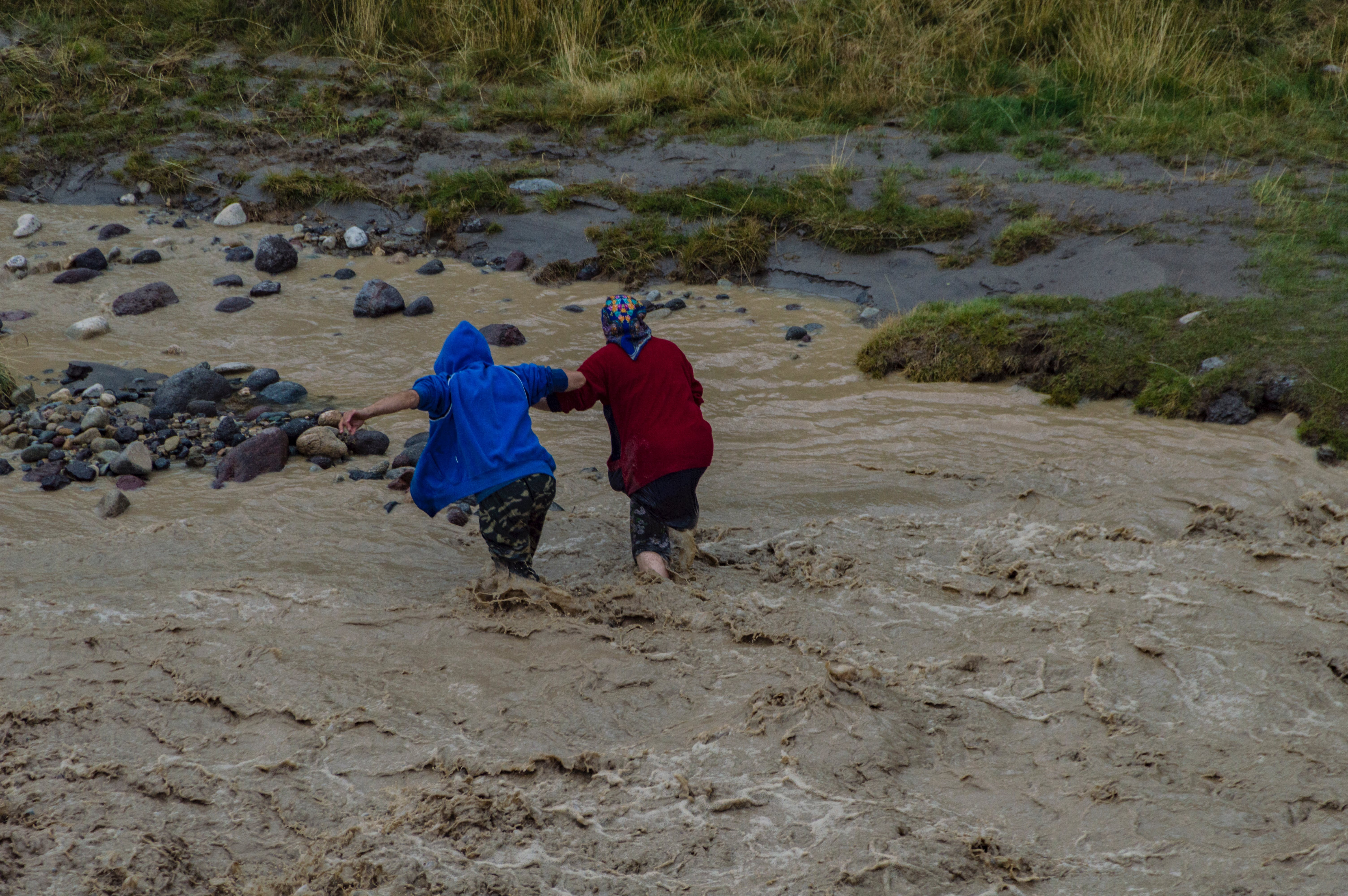
Most people reading this are in water up to their ankles. Few are yet up to their knees. Most of us are not yet up to our hips, though there are people around the world who are. Machado de Oliveira continues.
People’s priorities are bound to the level of water around them. As the waters rise, but have not yet reached our hips, we can prepare by learning to open ourselves to the teachings of the water, as well as the teachings of those swimming for their lives against multiple currents of colonial violence. This is the same violence that supports our comforts and securities within modernity.
Vanessa Machado de Oliveira
What does walking through water that’s a little above the ankle look like when we truly surrender to the fact that the future will not be what we’ve spent our lives thinking it would be? I don’t know, but it might look like seriously taking in news of the events and the losses happening everywhere in the world — from mega-fires to Category 5 hurricanes to massive floods to countless extinctions. It might look like a grieving acceptance that it’s already too late for human and natural systems to avoid devastating consequences. And it might look like a deeply internalized awareness that most of what we’ve always known will change. It might look something like despite the fact that we can’t be sure of the specifics, we have a feeling in our knotted-up guts that we need to prepare. I have a strong sense that it looks like fully comprehending that we can’t look to governments or other institutions to “fix” this — they’ve known about it for decades and we’re in worse shape than ever. But with water at ankle level, it now looks like we fully recognize they can’t and won’t fix it. (Thus, for part of the work at a personal level, I’ve drafted my list below.)
Again, this is not a prescriptive list. It’s just the answers that are clear for me thus far relative to what I can do personally at this moment given our predicament, as are the few basic principles underpinning these current answers.
- Basic Principles
- The future starts with a different kind of consciousness in the present than we’ve acted out of in the past.
- Less is more.
- Small is beautiful.
- So is close to home.
- Consume only real food and fibers that have been created with care and without cruelty.
- Take care of nature of which we’re but a part, and take care of each other, including those whose lives we never see.
- Deepen your understanding of how we got here and how things must change in order to stop the harm we’ve done. Identify your operating assumptions and let them go. Suspend judgments and throw open your own doors of perception. Break yourself open, start over, become unenclosed and available to what’s new and different, listening, being present everywhere you find yourself. Pay attention.
- Stop buying. Thoroughly use up what you have — clothes, books, dishes, vehicles, everything. For something truly needed, buy it from a local store, ideally something made locally or regionally. Whether it’s the car, computer, phone, clothes, dishes, or bed linens, keep and use things for the longest time possible. Make it a point of pride. Do more mending and repairing. Repurpose things — get creative about it. Keep pushing further to figure out more and more ways to contribute less and less to manufacturing, transport, and waste.
- Stop traveling. Find ways to see new things, be in nature, spend time with family, that are nearby. Work together with family members or other loved ones that live elsewhere to plan to meet at in-between locations, or to ride together on road-trips to see family members who can’t travel. If you still have to travel alone to see a family member, do it less often but augment this with Facetime, Zoom, and telephone calls. Regarding work, the pandemic proved we don’t need to travel in order to effectively get work done. When running errands in town, be strategic so you drive as little as possible; think through a route that accomplishes as many things as possible in one trip and make these trips less often.
- Stop consuming processed, packaged foods, and even “fresh” ones that had to travel to get to you (if they did, they aren’t that fresh).
- Eat locally grown food. Ideally buy directly from the source. Start a home vegetable garden if you can; growing in containers works too. Save and trade seeds locally. Support your local farmers by buying from them at the farmer’s market or signing up for their CSAs.
- If you eat or make use of animal products, make sure the ones you consume come from animals that were treated without cruelty and ideally raised nearby. Just seeking out humane and regenerative products through the Big Food/Big Ag industrial system’s retail stores won’t create the needed changes. These poor substitutes come from companies and their marketing firms that are greenwashing “grass-fed” (rather than truly regenerative) and “organic” (while still being deeply inhumane). In general, stay away from big brand names and find good local sources owned and run by people you can meet face-to-face.
- Consume as little plastic as possible. Both our oceans and our land are drowning in plastic trash that is poisoning us at every step in its lifecycle. It poisons the environment as it’s being made, it poisons us when we use it, it poisons the environment when we throw it away, and then it poisons us again when we eat plants and animals from the land and sea that have been poisoned themselves. Recycled plastics have even more toxic chemicals added to them and to the atmosphere in their creation. Fleece and other synthetic materials are shedding microplastics not only when we wash them but also when we’re wearing them — don’t buy or wear them. Forego single-use plastic containers, reuse any plastic bags as repeatedly as possible, buy glass rather than plastic containers, but mostly avoid plastic packaging by buying less stuff.
- Learn new skills that will make you less dependent on costly services, that will make you less vulnerable in terms of unforeseen events, that you can contribute to the well-being of others, that enrich your own life, that mean less buying, less travel, less shipping. Learn to darn and mend; learn to forage for wild edibles; learn to apply more permaculture principles for food growing and water retention; learn to fix a running toilet and other basic plumbing skills; learn to weld; learn to make herbal tinctures; learn to prune fruit trees; learn to distill fruit, potatoes, grains, juniper, botanicals, whatever works.
- Cut back your use of energy on all fronts. Cut way back on heating, wearing more layers and keeping active as much as possible throughout the day. If you start feeling cold, move around until you warm up. Turn lights and other electric items off whenever they aren’t in immediate use. Don’t buy or use items that require lithium batteries. When the computing device is plugged in for use, consolidate tasks so time on it is limited. When heating water (for showers, washing clothes, washing dishes), use as little hot water as possible to both conserve energy and save water. Do laundry and shower as infrequently as is reasonable (push yourself). Regarding laundry, only wash things in cold water, and if possible, hang them to dry. Be prepared for periods when power is suspended. Have lanterns or another low-energy back-up light source. Have a plan for staying warm without power. Have frozen ice packs, stored ice and coolers, or another way to keep food from going bad. Have a camp stove and small propane canisters for cooking and heating water, or a simple grate to put over a fire to set a pot on to warm up food and water. Perhaps most importantly, slow-down and relax into the silence of a period of time-out from our electrified world. Electricity makes our lives easier in many ways, but it also puts a ubiquitous emphasis on speed, productivity, and intrusion of all kinds. Go deep into the experience of what it could be like to fully unplug one’s life.
- Be mindful of water in as many ways as possible. Turn off water whenever possible while washing dishes. Cut back on showering or bathing and washing clothes, bed linens, and towels. Question the assumptions behind all of our ingrained habits. After all, we’re talking about water, the most precious resource we have. Beyond clothes for outdoor work, we only need a few good pieces and they should be made and cared for to last for decades. Dry cleaning is never necessary; natural fibers can be hand-washed at home. (Natural fibers from organic plants grown nearby or from animals raised healthfully and treated with kindness are the best materials for long-lasting items.)
- Plant trees for cooling shade, cleansing the air, and holding excess water in the soil. Plant trees now so they get a chance to get established before the air gets hotter, the soil drier, and the water more scarce. Grow plants, herbs, and bushes that are native to the area and particularly attractive to pollinators. Plant milkweed for butterflies. Use indoor gray-water and outdoor rain collection for as much irrigation as possible. Keep clean, full birdbaths in safe locations. Find as many ways as possible to take less from, and give more to, the whole ecosystem.
- Advocate and vote for measures and people that are committed to policy changes regarding redirecting subsidies from big multi-national corporations to small local farms and businesses that sustain communities in both good and challenging times. Do the same for other issues affecting the environment, ecosystems, bio-diversity, and social justice. National elections are important but local, county, and state are often even more so. Make your voice heard. Show up as a citizen.
- Be adaptable. Create your life so that you can be as adaptable as possible. Have back-up options for extreme hot or cold and dry or wet conditions. Be prepared for times without power or water. Keep frozen soups, stews, etc. for times you can’t get out for food, but also stock healthy non-perishables for longer periods when there’s no power. Dry any extra fruit from the trees. Have large containers of water stored for washing up and flushing (can be plastic for these uses); store drinking water (ideally in glass containers). If a disaster occurs and you don’t have enough stored clean water, you can use the water in your hot-water tank, pipes, and ice cubes. Consider purchasing emergency water filters. You can keep one at home and one in your vehicle. Water purification tablets are another option. Some stores carry cases of six 1-gallon bottles of water good for at least two years. Have one of these for every person in the household and extra for pets and guests. You’ll need enough water to get through at least one week following an emergency. One gallon of water per person per day is the general guidance given. Have your important documents, back-up drives, and any other critical items in a safe place that you can quickly locate and take with you for evacuation. Have a go-bag ready in case of wildfire or other emergency evacuation and know the evacuation route options. But also have a plan for “sheltering in place” should that be required. Have a safe spot prepared and what you need for sheltering in place for several days. Being prepared for most eventualities allows one to relax the mind and body and be present in the moment without feeling constantly on guard against what might happen.
- Build community. Most people don’t survive alone. And remember that community includes humans but also other-than human species. If you’re able to, find your place and settle in to support the others there in building and/or maintaining a strong community that has the skills and cohesion to adapt to whatever lies ahead. Be patient with groups you’re new to; let people come to know and trust you before you ask things of them. Whether you are relocating or you’re staying where you are, no matter the depth of the water, be present for and with others; be generous with your time and your resources. Have integrity in what you say and do. Trust your community to do the same. Check in on your neighbors. Be an optimist, but also a realist.
- Seek out what still holds meaning, beauty, and joy for you. These are essential characteristics of a life worth living.
In fairness though, these are all very belated actions. Further, many say it’s not enough and they too are right. Certainly doing anything less than these items has already fallen far short. Others say it’s crazy to think that people will do these things at all. Certainly those people have plenty of evidence to make their point. It’s also true that individual efforts aren’t enough. But doing all of these things is a bare minimum of effort. They are, literally, the least I can do. But most of all, the profound societal changes that must happen at the deep behavioral levels will happen through actions like these. It will take all of us doing all we can even in the face of what will sometimes feel futile. In purely physical terms of what has occurred in the atmosphere and on the surface of the planet, the past must be made up for before the future can begin to change. That is the intensive work we have to do now.
If/when the water gets up to our hips, we’ll be ready to swim — because we have to, but also because we’ve paid attention to the new world and begun to glimpse the way of it, and we will have learned from others who already had to do so.
“Walking up the trail to my lookout tower last night, I saw the new moon emerge from a shoal of clouds and hang for a time beyond the black silhouette of a shaggy, giant Douglas fir. I stopped to look. And what I saw was the moon — the moon itself, nothing else; and the tree, alive and conscious in its own spiral of time; and my hands, palms upward, raised toward the sky. We were there. We are. That is what we know. This is all we can know. And each such moment holds all that we could possibly need — if only we can see.”
Edward Abbey in Abbey’s Road
Thank you for reading Principles of Being.
Please feel free to share this post
if you found it interesting.

 Sign-up below to automatically
receive notifications of future posts.
 The Principles of Being
This was a very thoughtful post. What really struck me was this: “most people also do not understand how to turn awareness of these problems into concrete action to create a better world. We have no sense of our collective power and almost no organization in our communities.” I am always impressed by those big, creative protests in Europe… why can’t Americans seem to do that? We should be screaming in the streets all the time! The large climate organizations seem to concentrate in the big cities, and if you can’t get there to join them, what else can be done locally?
Your list of actionable things was very useful. While I know I’m well-prepared for a natural disaster, a long-term or even permanent disaster will need more work. I’d like to “learn new skills,” as you said, to be able to last it out more easily. Your message was hopeful yet realistic, so thank you.